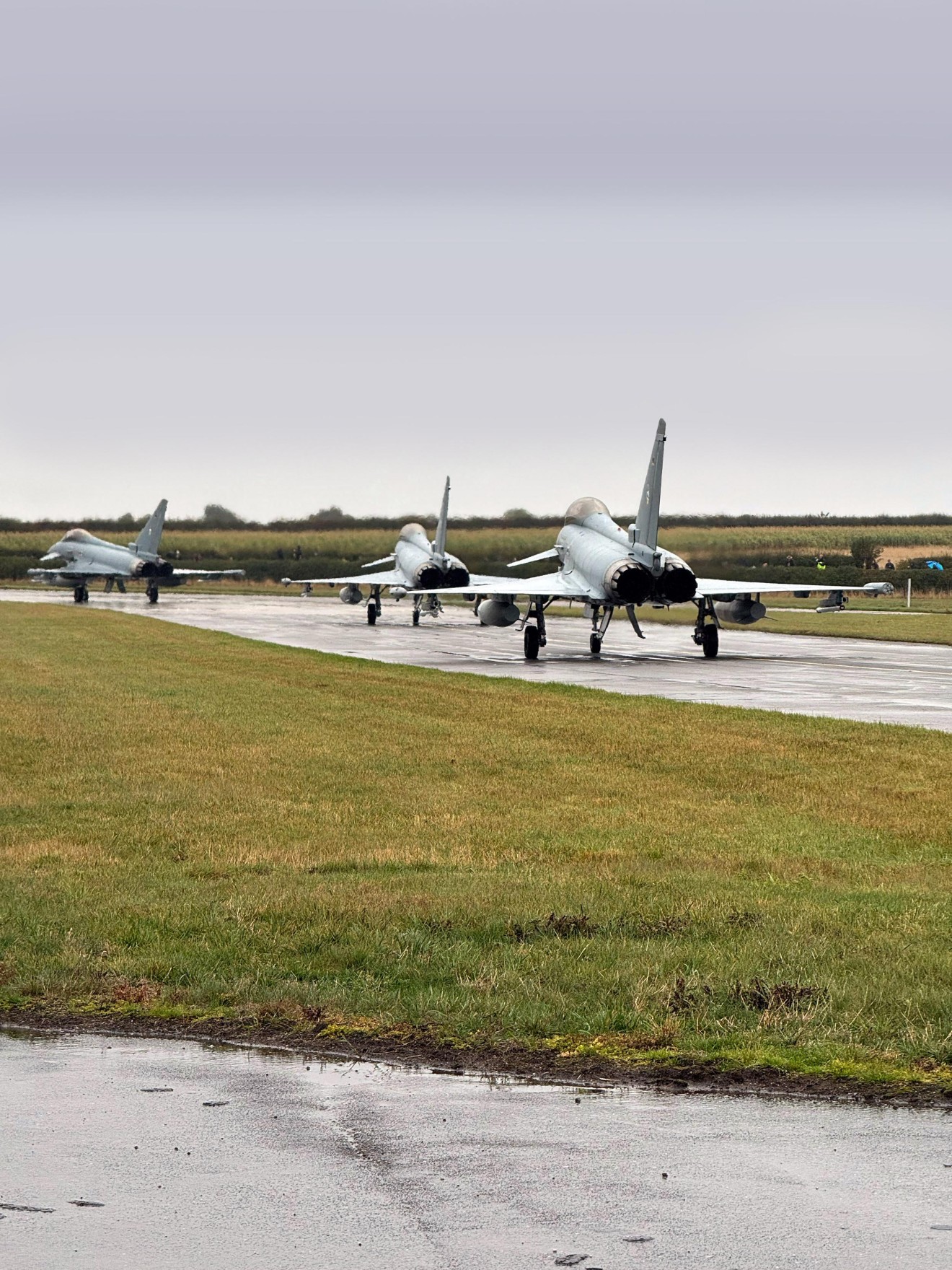
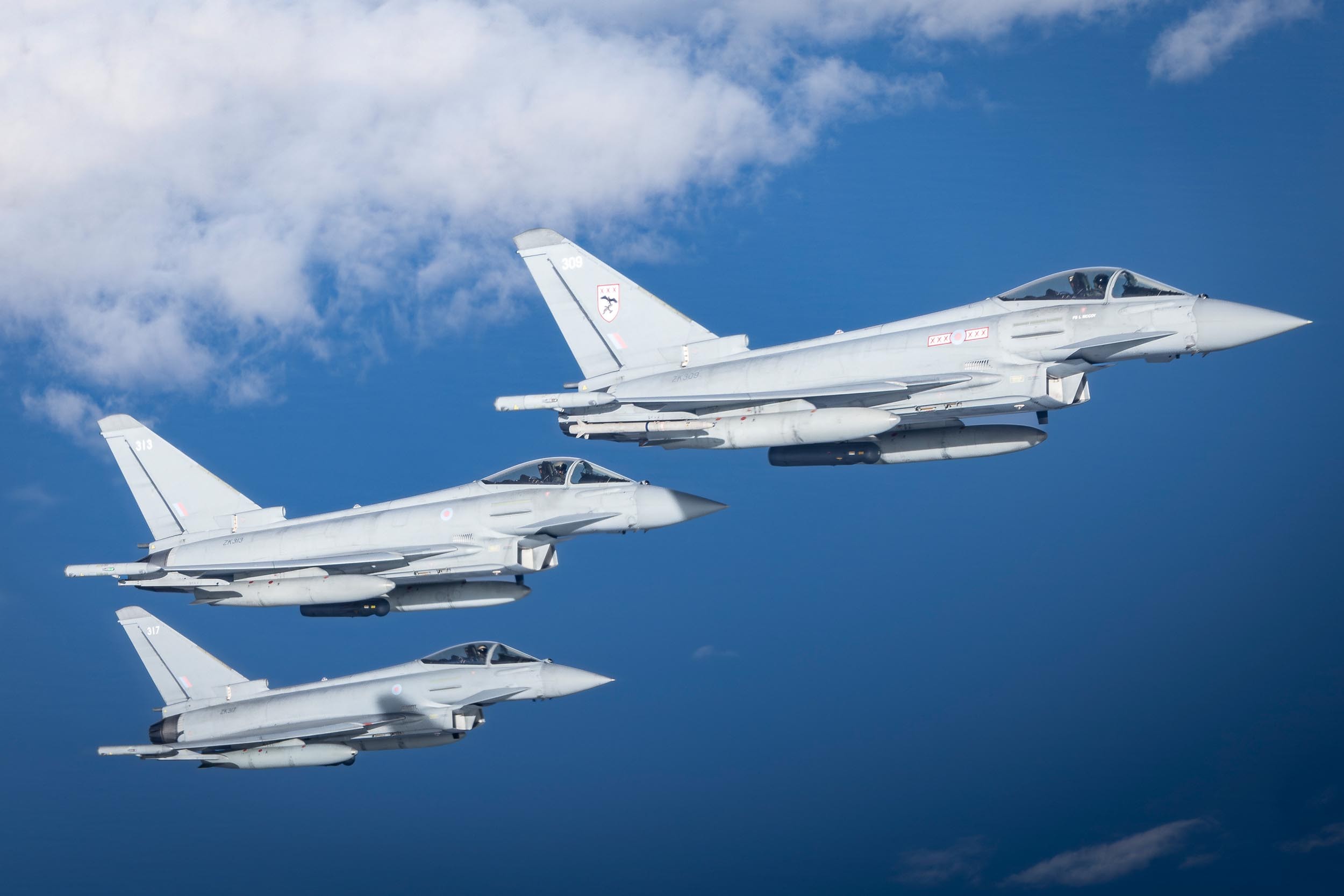
Held over three weeks – and seemingly all four seasons – Cobra Warrior brought together NATO and allied air forces for a series of large-scale, multinational missions across the UK and parts of the North Sea, with three Eurofighter Typhoon squadrons, playing a central part.
The bi-annual event sees the Royal Air Force host partner nations for an exhibition in warfighting scenarios, affording participants the opportunity to test their resolve alongside allies and against simulated adversaries – the least of which being the British weather.
A multinational effort
The latest iteration of Cobra Warrior featured aircraft and crews from the Royal Air Force, Italian Air Force, German Air Force, Canadian Air Force and the United States Air Force. Collectively, they launched complex missions involving up to 70 aircraft simultaneously.
These missions combined fast jets, intelligence platforms, heavy air mobility assets, helicopters and even 300 ground troops working in northern England. In total, as many as 80 aircraft could be in the air at once, making Cobra Warrior one of the most significant and most integrated training events in Europe.
Typhoon played a central role in the simulations, with between 30-40 Typhoons flying on any given day from bases in the UK, with squadrons from Grosseto in Italy and Neuburg in Germany hosted at Coningsby and Waddington respectively.
“It was a unique opportunity to train with our allies and be ready for future scenarios,” explained ‘Cavallo’, Commander of Italy’s 9th Squadron from Grosseto. “It helped us improve our mutual understanding and interoperability, so when we deploy together on real missions, we are already prepared.”
Eurofighter at the Core
The Eurofighter Typhoons were tasked with a full range of missions, from air superiority and escort missions to employing cruise missiles, free-fall weapons and close air support for troops on the ground. They worked seamlessly alongside U.S. F-15E Strike Eagles, F-35As and a B-52 bomber flying from RAF Fairford.
Typhoon has been involved in every mission you can imagine, It’s a class-leading platform and it has been knocking it out of the park.
For Italian crews, Cobra Warrior was also an invaluable opportunity to put their aircraft to the test. “The exercise allowed us to evaluate the Typhoon weapon system in a really complex scenario,” Cavallo explained. “Pilots had the chance to face different events and counter-threats and see how the aircraft performs at an operational level. It’s impressive.”
Building for the future
Cobra Warrior also reflected the reality of Europe’s changing airpower mix. With more than 500 F-35s due to be stationed in Europe in the coming years and similar numbers of Typhoons, integration between 4th and 5th-generation platforms is critical.
Cobra Warrior provided an unrivalled environment to rehearse that partnership. For Italy, the UK, Germany and their allies, the lessons are clear: interoperability and shared tactics are the key to future coalition success.
As Cavallo put it: “The best part of Cobra Warrior was the chance to train with our allies - the RAF, the Luftwaffe, the Canadians, the U.S. Air Force. We learn from each other and we are ready to face the future together.”
What is Cobra Warrior?
Cobra Warrior is one of the largest and most complex air training exercises in Europe. It’s run by the Royal Air Force, held twice a year, and lasts around three weeks.
Who takes part in Cobra Warrior?
The exercise brings together aircraft and personnel from across NATO and partner nations. In 2025, participants included the UK, USA, Germany, Italy, and Canada, flying from multiple RAF bases.
What kind of training does it involve?
Participants face the toughest simulated threats both in the air and on the ground. Scenarios cover air-to-air combat, suppression of enemy air defences, air–land integration, electronic warfare, plus cyber and space effects.
How big is the exercise?
On any given day, between 60–80 fast jets are airborne, supported by tankers, intelligence aircraft, transport planes, helicopters, and hundreds of troops on the ground.
Where does it take place?
The training area stretches across the North Sea, northern England, and southern Scotland. It measures roughly 150 by 80 nautical miles making it one of the largest exercise airspaces in Europe.
Why is Cobra Warrior important?
It’s the final phase of the UK’s Qualified Weapons Instructor (QWI) Course. Graduates become the tactical leaders and instructors in their air forces, shaping the next generation of fighter pilots.