What does reaching one million flying hours mean to you personally — and as CEO?
Reaching one million flying hours is a truly historic milestone for the Eurofighter programme. It represents more than three decades of commitment, innovation and collaboration across Europe.
As CEO, I see it as a very powerful signal of operational credibility. One million hours means that air forces have relied on this aircraft, day after day, year after year, to protect their airspace and execute demanding missions.
At a time when the security environment in Europe has fundamentally changed, this level of operational experience and trust is more important than ever. It confirms that Eurofighter Typhoon is not only a technological achievement, but a proven capability that contributes directly to Europe’s security and deterrence.
Why is this more than just a number? What does it represent behind the scenes?
A figure like this can sound abstract, but behind it there are thousands of people and decades of dedication.
Every flying hour represents careful engineering, rigorous maintenance, continuous upgrades and the professionalism of the pilots and crews who operate the aircraft. It reflects a whole ecosystem, industrial, technological and operational, working together to deliver reliable Air Power.
In today’s strategic environment, those flying hours also represent readiness. They show that the aircraft is not simply a platform on paper, but a capability that has been consistently available and trusted to perform in real operational contexts.
What does this say about the durability and reliability of the platform over time?
We can proudly say that around 80% of Core Nations’ operational air missions are executed by Eurofighter, which demonstrates its high mission reliability.
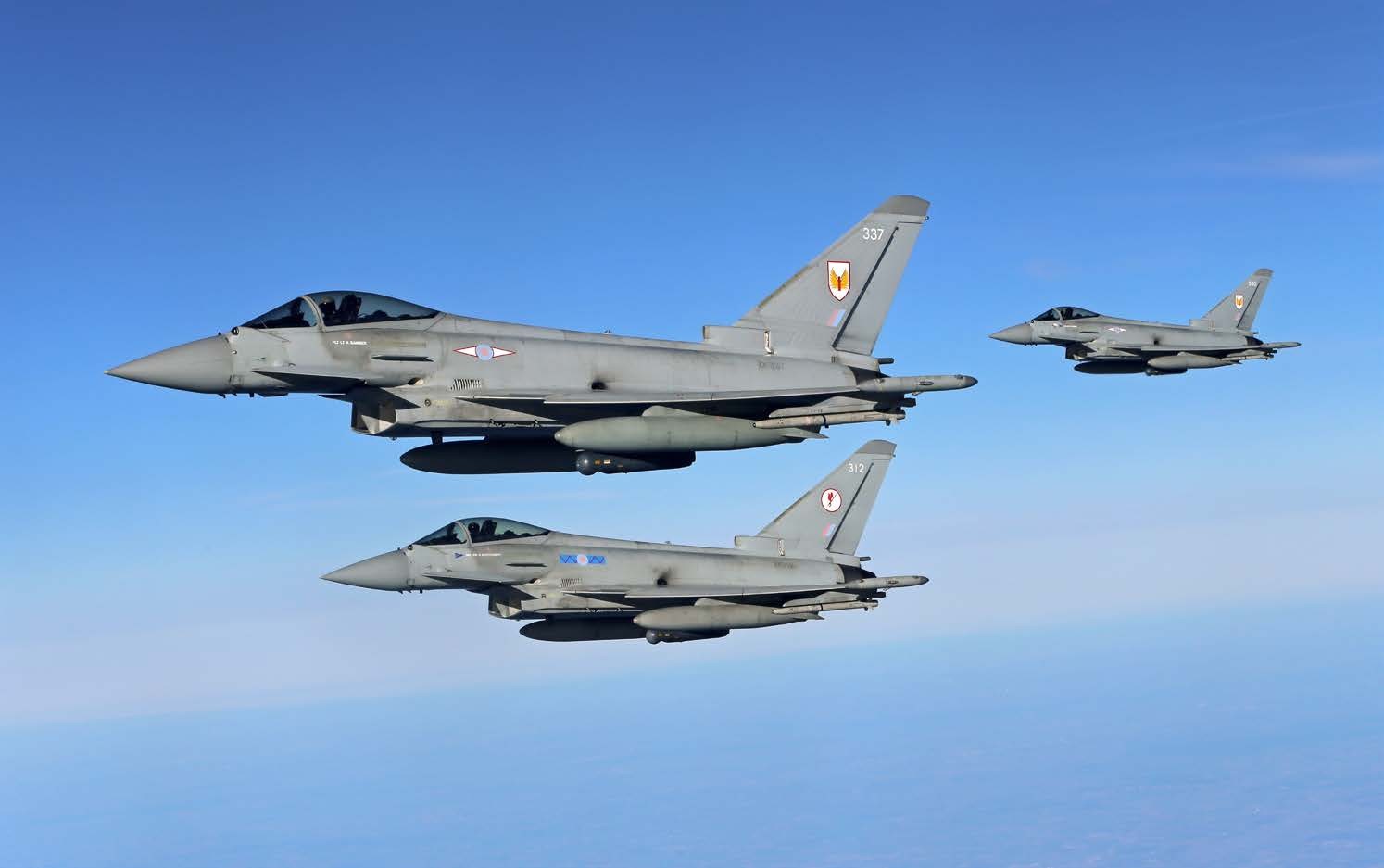
Whether it is air policing missions, joint patrol initiatives, combat missions or QRAs (Quick Reaction Alert), the Typhoon represents the air combat mass for Europe. If we think about its operational presence in the Middle East, we can reach the same conclusions.
So these million flying hours say everything. Eurofighter is, without question, one of the most reliable and combat-proven aircraft in the world, which has consistently delivered Air Power to the air forces operating it since its introduction into service.
That level of confidence does not happen by chance — it is built through experience, continuous improvement, and the robustness of the industrial and support network behind it. Today, Eurofighter stands as a cornerstone of NATO and allied air defence, fully interoperable and adaptable to a wide range of mission requirements. It is a platform you can trust, every hour of every day.
How has the programme maintained continuity and relevance across decades and generations of technology and personnel?
The key has been evolution. From the beginning, the programme was designed not as a static platform but as a system capable of continuous development.
Over the years, Eurofighter has integrated new sensors, weapons, connectivity and electronic warfare capabilities. This ability to evolve ensures that the aircraft remains operationally relevant even as the strategic environment changes.
At the same time, the programme has successfully transferred knowledge across generations of engineers, technicians and operators. That continuity of expertise is essential for maintaining such a complex capability over the long term.
What role has international collaboration played in sustaining the platform to this point?
International collaboration is at the very heart of the Eurofighter programme.
The platform is the result of a unique partnership between nations, industries and air forces across Europe. This cooperation has created a powerful industrial and technological ecosystem capable of sustaining and evolving the aircraft over decades.
In today’s geopolitical context, that cooperation takes on even greater importance. It strengthens Europe’s defence industrial base, reinforces alliance cohesion, and ensures that critical combat air capabilities remain available to European and allied nations.
Are there any decisions or turning points in the programme’s past that feel especially important now, in hindsight?
Looking back, one of the most important decisions was to design the aircraft with long-term evolution in mind. That strategic approach has allowed Eurofighter to continuously integrate new capabilities and remain relevant as operational requirements evolve.
Equally important has been the sustained commitment from partner nations to invest in upgrades and enhancements. Those decisions ensured that the aircraft did not remain static, but instead grew in capability alongside the evolving needs of European and allied air forces.
Looking ahead, how does this legacy shape Typhoon’s future and its role within European defence?
If anything, the current geopolitical situation makes the role of Typhoon even more relevant.
Europe is placing increasing emphasis on readiness, deterrence and strategic autonomy. In that context, Eurofighter represents a proven and immediately available combat air capability that can deliver air superiority, multi-role operations and credible deterrence.
At the same time, the aircraft will continue to evolve with new sensors, advanced connectivity and electronic warfare capabilities that will guarantee air dominance well into the 2060s. This means that Eurofighter will remain a central pillar of European Air Power while also contributing to the broader ecosystem of next-generation combat air systems.
Finally, what message would you want to share with the thousands of people — engineers, pilots, maintainers — whose work has made this milestone possible?
My message is one of pride and appreciation. Reaching one million flying hours is not the achievement of a single organisation or generation. It is the result of the dedication, professionalism and expertise of thousands of people across Europe and beyond.
Thanks to their work, Eurofighter Typhoon continues to deliver the operational capability that our air forces rely on in an increasingly complex and uncertain security environment.
This milestone truly belongs to them.